

Key Takeaways
- Second grade social studies often asks children to connect reading, vocabulary, sequencing, maps, and classroom discussion all at once, so small mistakes can feel bigger than parents expect.
- When your child confuses timelines, community roles, geography words, or historical facts, the issue is often still-developing reasoning and language skills, not a lack of effort.
- Clear feedback, guided practice, and one-on-one support can help children slow down, make connections, and build confidence in social studies tasks.
Definitions
Social studies: In 2nd grade, social studies usually includes communities, geography, maps, citizenship, history, culture, and how people live and work together.
Guided practice: This is structured support from a teacher, parent, or tutor while a child works through a skill step by step before doing it independently.
Why social studies errors can feel bigger in 2nd grade
Parents are sometimes surprised by how discouraged a child can become after getting a few social studies questions wrong. At this age, children are still learning how school subjects work, and that is a big reason why 2nd grade social studies mistakes are hard. The challenge is not only about remembering facts. It is also about understanding time, place, community roles, and cause and effect in ways that are still new to elementary learners.
In many classrooms, 2nd grade social studies asks students to read short passages, listen to teacher explanations, study maps, compare past and present, and answer questions in complete sentences. That means one mistake may come from several overlapping skills. A child might miss a question about a mayor not because they do not understand community leadership, but because they misread the answer choices, mixed up the vocabulary, or rushed through the worksheet.
Teachers who work with early elementary students often see this pattern. A child may participate well in class discussion but struggle when the same idea appears in a quiz format. For example, your child may be able to explain that firefighters help the community, but then choose the wrong answer on paper if the question asks which public service worker responds to emergencies. The concept may be there, yet the academic task is still demanding.
Another reason mistakes can feel heavy is that 2nd graders are becoming more aware of right and wrong answers. In kindergarten and 1st grade, many learning activities are exploratory and heavily supported. By 2nd grade, children are often expected to show what they know more independently. When they make errors, they may not yet have the emotional distance to see those errors as part of learning. They may simply think, “I am bad at social studies.”
That is why parent awareness matters. When you understand the learning demands behind the work, it becomes easier to respond calmly and helpfully. Social studies mistakes at this level are common, especially when students are still building reading stamina, academic vocabulary, and confidence with school routines.
What 2nd grade social studies is really asking students to do
Second grade social studies can look simple on the surface because topics such as neighborhoods, maps, rules, holidays, and past versus present sound familiar. In practice, though, the course asks children to do a lot of mental organizing. They need to sort information into categories, notice differences, and explain relationships between people, places, and events.
Consider a typical unit on communities. Your child may need to learn the difference between goods and services, identify community helpers, explain why rules matter, and compare urban, suburban, and rural areas. Those are not just vocabulary tasks. They require your child to classify ideas and apply them in context. A student might know what a doctor does, for instance, but still struggle to explain whether medical care is a good or a service and why.
Map skills are another common sticking point in 2nd grade social studies. Children may be asked to use cardinal directions, read a map key, identify land and water, or follow a route on a simple map. Adults often see these as straightforward tasks, but they depend on spatial reasoning, language understanding, and attention to detail. If your child confuses left and right in daily life, north and south on a classroom map may be even harder.
History topics can also create confusion because 2nd graders are still developing a sense of time. Words such as past, present, long ago, decade, and tradition do not always feel concrete yet. A child may understand that grandparents were children once, but still struggle to place events in sequence on a timeline. If a worksheet asks which invention came first or how life changed over time, your child may need more support than the assignment seems to suggest.
Social studies also relies heavily on discussion and explanation. Many teachers want students to answer questions like “Why do communities have rules?” or “How are schools today different from schools long ago?” These are excellent learning questions, but they ask children to think beyond memorization. A student who knows the facts may still need help turning those ideas into spoken or written responses.
When parents understand these hidden demands, classroom mistakes make more sense. Your child is not just learning social studies content. They are learning how to think like a student in social studies.
Elementary 2nd grade social studies challenges parents often notice
In elementary school, learning patterns are often easier to spot at home than parents realize. You may notice your child guessing on homework, skipping map details, or giving very short answers to social studies questions. These are useful clues.
One common pattern is vocabulary confusion. Social studies includes many words that sound familiar but have school-specific meanings, such as citizen, government, region, continent, vote, and resource. A child may hear these words in class and nod along, yet still not use them accurately. For example, if asked what a citizen is, your child might say “someone in a city” because the word sounds similar. That kind of mistake is developmentally normal, but it can affect understanding across a whole unit.
Another pattern is trouble with comparison. Second graders are often asked to compare communities, cultures, transportation from past and present, or different types of landforms. Some children focus on one obvious detail and miss the broader idea. If shown pictures of a rural farm area and a city neighborhood, they may only notice that one has animals and one has buildings, without understanding how people live and work differently in each place.
Parents also frequently see difficulty with written responses. A child may know more than they can write. On a worksheet asking, “Why are rules important in a community?” your child might say the answer out loud clearly but write only “Because rules.” This does not mean they learned nothing. It often means they still need support with sentence building, organizing thoughts, and using academic language.
Attention and pacing can play a role as well. Social studies assignments sometimes look less urgent to children than math pages or reading books, so they may rush. They skip the map legend, miss the word not in a multiple-choice question, or answer from background knowledge instead of using the passage. In those moments, feedback matters more than correction alone. A helpful adult can point out where the thinking went off track and show how to check work more carefully.
If your child has ADHD, language-based learning differences, or an IEP or 504 plan, these patterns may be even more noticeable. Social studies can involve listening, reading, speaking, and writing at the same time. That does not mean the subject is out of reach. It means the instruction may need to be more explicit, paced differently, or broken into smaller steps.
Why mistakes in social studies can affect confidence so quickly
Social studies is personal for many children because it connects to people, places, families, and everyday life. When they misunderstand a topic that seems familiar, they may feel confused in a deeper way than they do with a simple computation error. If your child thinks, “I know what a neighborhood is, so why did I get this wrong?” the mistake can feel more frustrating.
There is also less obvious right-answer practice in social studies than in some other elementary subjects. In math, children may do many similar problems in a row. In 2nd grade social studies, one page may ask them to read a paragraph, label a map, interpret a picture, and answer a short response. Because the task types vary, some children do not get enough repetition to feel secure before being assessed.
Classroom dynamics matter too. Social studies often includes group discussion, turn-and-talk activities, and oral questioning. A child who is unsure may hear classmates answer quickly and assume everyone else understands. That can lower confidence even when many students are still learning the same skill.
Parents may notice this after school in comments such as “I am not good at maps” or “I always mix up history stuff.” These broad statements usually come from a few repeated experiences, not from a true inability. Children at this age often generalize quickly from small setbacks.
This is where calm, specific feedback can make a real difference. Instead of saying, “You need to study harder,” it often helps to say, “You understood what a community helper is, but this question asked you to sort jobs into goods and services. Let’s practice that part together.” Specific language shows your child that mistakes are fixable and tied to a skill, not to identity.
For some families, building this mindset at home goes hand in hand with confidence support in other school areas. Resources on confidence building can help parents reinforce persistence without making schoolwork feel stressful or high pressure.
How guided practice helps children correct social studies misunderstandings
When a child keeps making similar errors in 2nd grade social studies, the most effective support is usually not more worksheets. It is guided practice that slows the task down and makes the thinking visible.
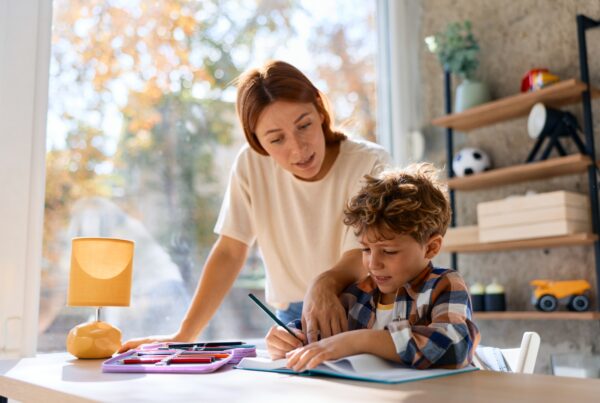
Imagine your child misses several questions about reading a map. Instead of saying, “Look harder,” a teacher, parent, or tutor might walk through the process step by step. First, look at the title. Next, check the map key. Then find the compass rose. After that, read the question and underline the important words. This kind of support teaches a repeatable routine. Over time, your child learns how to approach the task independently.
The same is true for timeline work. If your child confuses what happened first, next, and last, guided practice might involve using picture cards from daily life before returning to historical events. For example, you could sequence waking up, eating breakfast, and going to school. Then move to social studies examples such as “people traveled by horse,” “cars became common,” and “many people now use airplanes.” This helps children connect abstract history skills to concrete experiences.
Vocabulary instruction is another area where individualized support can help. A strong adult guide will not only define the word government but also use it in examples your child can understand, such as classroom rules, school leadership, or community decisions. Children often need to hear and use social studies words multiple times in speech, reading, and writing before they truly stick.
Feedback should also be immediate and clear. If your child writes that a factory is a service, it helps to respond with a simple explanation such as, “A factory makes something people can buy, so that is a good. A service is work someone does for others.” Corrective feedback works best when it is tied to one idea at a time.
In one-on-one or small-group tutoring, this process can become even more targeted. A tutor can notice whether the main issue is reading the question, understanding the concept, organizing the answer, or staying focused through the task. That kind of individualized instruction is often what helps children move from repeated mistakes to steady improvement.
What parents can do at home without turning social studies into a battle
Support at home works best when it feels connected to daily life. Social studies is all around your child already, which makes it easier to reinforce naturally.
When driving or walking, talk about maps and direction words. Ask simple questions like, “Are we turning east or west on the classroom map you used this week?” If that feels too advanced, start with landmarks and symbols. Ask your child to draw a map of the route from the front door to the kitchen and create a key for furniture or rooms.
When discussing family routines, bring in time and sequence language. Use words like before, after, past, present, and long ago. If your child is learning about history, look at old family photos and talk about how clothing, transportation, or schools may have changed. This helps make social studies concepts more concrete.
You can also strengthen social studies through conversation. If homework asks about rules, communities, or leaders, ask your child to explain the idea aloud before writing. Many 2nd graders can speak an answer they cannot yet put on paper independently. Once they say it, help them turn it into a sentence. That bridge from oral language to written response is important in elementary classrooms.
Keep practice short and focused. Ten minutes spent sorting pictures into goods and services or comparing rural and urban places is often more effective than a long, tiring review session. Young learners usually improve more with frequent, manageable practice than with heavy correction all at once.
Finally, pay attention to patterns. If your child struggles only with maps, only with vocabulary, or only with written explanations, that information can guide the support you seek. It can also help you talk productively with the classroom teacher about what is happening and what kind of extra practice may help.
Tutoring Support
If your child is getting stuck in 2nd grade social studies, extra support can be a practical and encouraging next step, not a sign that something is wrong. K12 Tutoring works with families to identify the specific skills underneath classroom mistakes, whether that means map reading, vocabulary development, timeline sequencing, reading comprehension, or turning ideas into written answers.
Personalized instruction can help children revisit confusing concepts at a pace that fits them. In social studies, that often means using visuals, discussion, guided questioning, and targeted feedback so students can understand not just the right answer, but how to think through similar questions in the future. Over time, this kind of support can build both academic understanding and independence.
For parents, individualized tutoring can also make school expectations clearer. When you know what your child is being asked to do in class and why certain errors keep happening, it becomes easier to support progress at home without pressure or guesswork.
Related Resources
- How To Build Your Child’s Confidence: A Parent’s Guide – Crimson Rise
- How High-Quality, Small-Group Tutoring Can Accelerate Learning – IES (U.S. Department of Education)
- Roles in Gifted Education: A Parent’s Guide – davidsongifted.org
Trust & Transparency Statement
Last reviewed: May 2026
This article was prepared by the K12 Tutoring education team, dedicated to helping students succeed with personalized learning support and expert guidance. K12 Tutoring content is reviewed periodically by education specialists to reflect current best practices and family feedback. Have ideas or success stories to share? Email us at [email protected].