Key Takeaways
- Social Studies 7 often asks students to read closely, interpret sources, organize evidence, and explain historical thinking all at once, which can make the course feel harder than families expect.
- Many middle school students understand parts of the content but struggle to connect geography, history, civics, and writing skills during quizzes, projects, and document-based assignments.
- Targeted feedback, guided practice, and one-on-one support can help your child learn how to analyze sources, build stronger written responses, and keep up with pacing.
- With steady instruction and practice, students can build confidence and become more independent in social studies work.
Definitions
Primary source: a document, image, speech, map, law, or artifact created during the time being studied. In Social Studies 7, students may need to examine primary sources for point of view, purpose, and historical context.
Claim and evidence: a claim is the main idea or answer a student is trying to prove, and evidence is the specific fact, detail, or source that supports it. This skill appears often in short responses, essays, and class discussions.
Why Social Studies 7 can feel harder than parents expect
If you have wondered why social studies 7 skills are challenging for your child, the answer is often not a lack of effort. In many middle school classrooms, this course shifts from mostly learning facts to using facts in more demanding ways. Students are expected to read informational text, compare perspectives, interpret maps and timelines, remember key vocabulary, and write about cause and effect. That combination can be a big jump.
Teachers in Social Studies 7 commonly ask students to do more than identify what happened in history. Your child may need to explain why an empire expanded, how geography influenced settlement, or what a government system reveals about power and citizenship. Those tasks require background knowledge, reading comprehension, and organized thinking at the same time.
This is also a stage when classroom expectations become more independent. A student might be given a textbook section, a political cartoon, and a set of notes, then asked to answer open-ended questions without much step-by-step modeling. For some students, that feels manageable. For others, especially in grades 6-8, the challenge is not motivation but cognitive load. There are simply many moving parts.
Parents often notice this when a child says, “I studied, but I still did badly on the quiz.” In social studies, studying by rereading notes is not always enough. Students may need to practice retrieving information, grouping ideas by theme, and explaining relationships between events. That is a learnable process, but it usually takes explicit instruction and feedback.
From an educational standpoint, this makes sense. Middle school learners are developing abstract reasoning, but they are still building the habits needed to analyze information independently. That is one reason Social Studies 7 can expose gaps in note-taking, reading stamina, and written expression even when a student seems interested in the subject.
Social Studies 7 skills that commonly create friction
One major challenge is source reading. Social studies texts are dense, and they often include domain-specific words such as revolution, migration, constitution, trade network, empire, and reform. Your child may know the general topic but still miss the meaning of a paragraph because one or two key terms are unclear. When that happens, comprehension drops quickly.
Another common difficulty is identifying the main idea in nonfiction. A chapter about ancient civilizations, for example, might include geography, religion, social structure, economics, and government all in the same section. Students have to sort what matters most. Some copy every detail into their notes. Others write too little and miss the central concept.
Cause-and-effect reasoning is also a frequent sticking point. A teacher may ask, “How did geography influence the development of early societies?” A student who memorized river names may still struggle to explain that access to water supported farming, population growth, trade, and political organization. The challenge is moving from isolated facts to connected explanation.
Then there is writing. In Social Studies 7, written responses often need more structure than students realize. A short answer about the Roman Republic or the Silk Road is not just about being correct. It also requires a complete idea, specific evidence, and academic vocabulary used accurately. Students may understand the material verbally but have trouble turning that understanding into a clear paragraph.
Map and timeline interpretation can add another layer. Your child may need to compare regions, trace movement, or place events in order. These are visual reasoning tasks, and they can be difficult for students who rush or who do not yet know how to read symbols, scales, legends, and chronology carefully.
Finally, many seventh graders are still learning how to manage multi-step assignments. A social studies project might involve reading, note cards, a thesis statement, source citations, and a final presentation. If organization is weak, content understanding can get buried under missing papers, incomplete notes, or last-minute work. Families who want support with planning and routines sometimes find it helpful to explore resources on organizational skills alongside course-specific help.
What this looks like in a middle school Social Studies 7 classroom
In a typical middle school Social Studies 7 class, your child may rotate between lecture notes, textbook reading, discussion, map work, and short writing tasks. That variety is valuable, but it can make the course feel unpredictable. A student who does well on vocabulary quizzes may struggle on a document-based question. Another may enjoy class discussion but freeze during a test that asks for written analysis.
Consider a unit on ancient China. A teacher might ask students to read about the Huang He, study a map, and explain how rivers affected settlement and trade. Your child has to understand the reading, notice the geographic pattern, and connect those ideas in writing. If one skill is weak, the whole task feels harder.
Or imagine a lesson on forms of government. Students may compare monarchy, democracy, and republic systems. The challenge is not just memorizing definitions. They may need to analyze who holds power, how leaders are chosen, and what rights citizens have. These comparisons demand precision. A student who uses broad language like “people are in charge” may lose points even if the general idea is close.
Teachers also often ask students to infer. For example, a class may examine a law code, a speech, or an image from a historical period and answer questions about values, authority, or social roles. This is a sophisticated skill for middle schoolers. It asks them to read between the lines while still grounding their answer in evidence from the source.
Because classrooms move quickly, students do not always get enough time to process mistakes before the next topic begins. That is why teacher feedback matters so much in this course. When a student learns exactly why an answer was incomplete, vague, or unsupported, the next assignment becomes more manageable. Without that feedback, the same pattern can repeat across units.

Why does my child know the facts but still struggle on assignments?
This is one of the most common parent questions in Social Studies 7. A child may remember names, places, and dates but still earn lower grades on classwork or tests. Usually, the issue is not factual recall alone. It is the transfer of knowledge.
For example, your child may know that the Nile River was important to ancient Egypt. But on an assessment, the question may ask, “Explain how the Nile shaped Egyptian civilization.” That wording requires more than one fact. A strong answer might mention farming, transportation, trade, settlement patterns, and stability. Students who only memorize single facts may not realize they need a broader explanation.
Something similar happens with compare-and-contrast questions. A student may know several facts about Athens and Sparta but still struggle to organize them into a meaningful comparison. They need a structure such as government, military, education, and daily life. Without a framework, their response can sound scattered even when the information is accurate.
Open-ended questions are especially revealing because they show whether a student can select relevant evidence. Many middle schoolers include the first fact they remember rather than the best fact for the question. Guided instruction can help them slow down, identify what the prompt is really asking, and choose evidence with purpose.
This is also why individualized support can be useful. Some students need help reading the prompt carefully. Others need sentence starters, examples of strong responses, or practice turning notes into paragraphs. In one-on-one or small-group settings, a tutor can model exactly how to move from facts to analysis, which is often the missing step.
How guided practice builds stronger history and civics thinking
When parents ask why social studies 7 skills are challenging, it helps to remember that many of these abilities are not automatic. Students need repeated, supported practice with the exact kinds of thinking the course expects.
One effective strategy is modeling how to annotate a source. Instead of telling students to “read carefully,” a teacher or tutor might show them how to circle unfamiliar words, underline evidence, and write a brief margin note about the author’s point of view. This makes an invisible thinking process visible.
Another helpful support is sentence-level scaffolding. If your child struggles with written responses, they may benefit from frames such as, “One reason this civilization grew was…” or “The source suggests… because…” These supports are not shortcuts. They help students organize historical reasoning until the structure becomes more natural.
Graphic organizers can also make a real difference in Social Studies 7. A cause-and-effect chart, comparison table, or timeline organizer helps students sort information before they write. For a unit on trade routes, for instance, a student might list goods exchanged, regions connected, and cultural effects. Once ideas are grouped, writing becomes less overwhelming.
Feedback should be specific. “Add more detail” is less useful than “Explain how the mountain barrier affected trade and communication.” In social studies, students improve faster when they know exactly which part of their reasoning needs development.
Guided retrieval practice matters too. Instead of only rereading notes, students can answer short questions from memory, label blank maps, or explain a concept out loud. These methods strengthen recall and reveal gaps before a quiz. This is an area where parents can help at home by asking focused questions like, “What caused this event?” or “How were these two societies different?”
Educationally, this kind of support aligns with how middle school students learn best. They benefit from explicit modeling, structured repetition, and chances to revise after feedback. Those are also the conditions that tutoring can provide when classroom time is limited.
How parents can support Social Studies 7 learning at home
You do not need to reteach the course to help your child. Small, course-specific routines can make a meaningful difference.
Start by asking to see the actual assignment or quiz review sheet. In social studies, the wording of the task matters. A question that says describe is different from one that says explain or compare. Helping your child notice those differences can improve the quality of their responses.
Encourage active review instead of passive rereading. Your child can cover their notes and try to explain a topic aloud, create a quick timeline from memory, or sort vocabulary into categories like geography, government, economy, and culture. These habits are more effective for this subject than simply scanning pages.
It also helps to break bigger tasks into parts. If your child has a project on ancient Greece, one evening might focus on gathering facts, the next on organizing evidence, and the next on drafting the response. This kind of pacing reduces overload and supports stronger thinking.
When your child gets work back, look at teacher comments together. If the note says “needs evidence” or “answer the full question,” that feedback points to a specific skill to practice. Over time, students become more independent when they learn how to use feedback rather than just reacting to the grade.
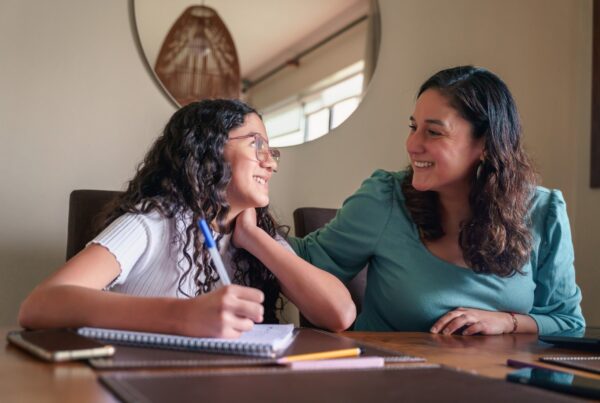
If your child often understands class discussion but struggles on written work, consider extra support that focuses on academic writing within social studies. If the issue is reading dense text or managing multi-step assignments, individualized instruction can target those needs more precisely. This is where K12 Tutoring can be a helpful educational partner, offering guided practice that matches your child’s pace and current skill level.
Support does not have to mean something is wrong. In many families, tutoring is simply one more way to give a student clear explanations, time to ask questions, and practice with feedback. That can be especially valuable in a course like Social Studies 7, where success depends on combining content knowledge with reading, reasoning, and writing.
Tutoring Support
Social Studies 7 can be demanding because students are learning how to think historically, read informational text closely, and express ideas with evidence. If your child is having trouble with source analysis, written responses, test preparation, or keeping pace with assignments, personalized support can help break those skills into manageable steps.
K12 Tutoring works with families to provide individualized academic support that fits the student in front of us. A tutor can model how to analyze a map, organize a compare-and-contrast paragraph, study for a unit test, or use teacher feedback to improve the next assignment. The goal is not just better grades on one unit. It is stronger understanding, more confidence, and greater independence over time.
Related Resources
- How To Build Your Child’s Confidence: A Parent’s Guide – Crimson Rise
- How High-Quality, Small-Group Tutoring Can Accelerate Learning – IES (U.S. Department of Education)
- Roles in Gifted Education: A Parent’s Guide – davidsongifted.org
Trust & Transparency Statement
Last reviewed: May 2026
This article was prepared by the K12 Tutoring education team, dedicated to helping students succeed with personalized learning support and expert guidance. K12 Tutoring content is reviewed periodically by education specialists to reflect current best practices and family feedback. Have ideas or success stories to share? Email us at [email protected].