Key Takeaways
- Kindergarten science often feels harder than adults expect because young children are learning new words, observation skills, and cause-and-effect thinking at the same time.
- Many science tasks in kindergarten ask children to describe, compare, sort, predict, and explain, which can be challenging even when they are curious and engaged.
- Hands-on practice, clear feedback, and one-on-one guidance can help your child connect what they see in class to the science ideas their teacher wants them to understand.
- When a child needs extra support, individualized instruction can slow the pace, build vocabulary, and strengthen confidence without adding pressure.
Definitions
Observation is the skill of noticing details using the senses. In kindergarten science, children may observe weather, plants, animals, water, light, or classroom materials and then talk about what they notice.
Cause and effect means understanding that one thing happens because of another. A kindergarten student begins practicing this when they talk about what happens when ice warms up, when a plant does not get water, or when an object is pushed.
Why science feels different in kindergarten
If you have wondered why kindergarten science concepts are hard to learn for some children, you are not alone. Science in the early grades looks playful from the outside, but it asks young learners to do several demanding things at once. Your child may need to listen carefully, notice physical details, learn unfamiliar vocabulary, compare objects, remember what happened during an activity, and explain their thinking in words.
That combination can be a lot for a 5- or 6-year-old. A child might enjoy watching a seed sprout or testing which objects sink and float, but still struggle to answer the teacher’s follow-up questions. In many classrooms, the challenge is not interest. It is turning curiosity into language, reasoning, and evidence.
Kindergarten science also depends on developmental skills that are still emerging. Young children are learning how to focus on one feature at a time, how to sort information into categories, and how to tell the difference between what they think will happen and what they actually observed. These are real academic skills, not just classroom behaviors.
Teachers know this, which is why strong kindergarten science instruction usually includes modeling, repetition, visuals, discussion, and guided practice. Parents sometimes see only the worksheet or quick classroom report and miss the thinking work behind it. If your child says science is confusing, they may be reacting to the language and reasoning demands rather than the topic itself.
Common kindergarten science challenges in the classroom
In elementary science, the earliest units often focus on weather, seasons, living and nonliving things, basic needs of plants and animals, motion, materials, and the five senses. These topics sound simple to adults because they are familiar. For a young learner, though, each unit includes hidden layers of difficulty.
Take a lesson on living and nonliving things. Your child may be asked to sort pictures of a dog, rock, tree, toy car, and mushroom. That sounds straightforward, but the task requires more than naming objects. Your child has to understand what makes something living, remember the class definition, and apply it to examples that are not always obvious. A child may call a toy dog living because it looks like a dog, or say the sun is alive because it moves across the sky.
Weather lessons create similar challenges. A student may know it is raining outside, but have trouble comparing rainy, cloudy, sunny, and windy conditions over several days. Tracking patterns requires memory, language, and early data skills. If the class makes a weather chart, your child is not just learning science. They are also learning how to observe consistently and talk about change over time.
Another common sticking point is properties of materials. In class, students might touch cotton, foil, wood, and plastic and describe them as soft, shiny, rough, hard, or bendable. This is valuable science work, but it can be difficult for children who know the feeling of an object yet do not have the words to describe it. A child may say everything is “nice” or “weird” because the academic vocabulary is still new.
Teachers often see this pattern during discussions, science journals, and simple assessments. A child participates happily in the activity but gives short or inaccurate answers afterward. That does not mean the child is not capable. It usually means they need more guided practice connecting hands-on experiences to the language of science.
Why language plays such a big role in kindergarten science
One of the strongest academic explanations for early science difficulty is that science learning is deeply tied to language development. In kindergarten, children are still building everyday vocabulary, sentence structure, and listening comprehension. Science adds another layer with words like observe, compare, predict, habitat, temperature, float, sink, and change.
Even familiar words can have more precise meanings in class. For example, a child may use the word “hot” for many things, but a science lesson may ask them to compare warmer and cooler temperatures. A child may know that plants need water, but still struggle to explain that sunlight and water help plants grow. The idea may be there, while the language to express it is still developing.
This is especially noticeable when teachers ask open-ended questions such as, “What did you notice?” “How are these the same and different?” or “What do you think will happen next?” These are excellent questions because they build reasoning. They are also hard questions for young learners.
Some children need wait time before answering. Others benefit from sentence starters like “I observed…” or “I think this will happen because…” When adults provide that structure, children often show more understanding than they could express on their own at first.
If your child is learning English, has a language-based learning difference, or simply develops verbal skills a little later, science may feel uneven for a while. That is common. Supportive instruction can make a big difference by pairing visual examples, repeated vocabulary, and simple guided conversation. Families looking for broader learning support can also explore resources for struggling learners.
Elementary kindergarten science and the challenge of abstract thinking
Another reason kindergarten science concepts can be tricky is that many lessons ask children to think beyond what is immediately visible. Young learners are concrete thinkers. They learn best through direct experience, repetition, and clear examples. Science sometimes asks them to make a mental leap.
For example, your child may watch ice melt and understand that the cube becomes water. But the idea that matter changes form is more abstract than simply noticing a puddle. A lesson on shadows may be fun outside on the playground, yet the explanation that light is blocked by an object can take longer to understand. A unit on animal needs may seem obvious until students are asked to compare the needs of different animals and explain why habitats matter.
Kindergarteners are also still learning that one event can have a predictable result. If a class plants two seeds and waters only one, the teacher is introducing early scientific reasoning. Your child has to notice differences, remember what happened, and connect the result to the condition. That is a major thinking task for this age.
Parents sometimes notice this when a child can repeat a fact but cannot apply it. A child may say, “Plants need sun,” then place a pretend plant under a bed during play. This does not mean the lesson failed. It means the concept has not yet become flexible knowledge. Children often need repeated examples in different settings before they can use a science idea independently.

What struggle can look like at home
Science difficulty in kindergarten does not always look dramatic. Often, it shows up in small patterns. Your child may bring home a paper with pictures sorted incorrectly. They may give one-word answers about a classroom experiment. They may remember the fun part of the lesson but not the science point. They may confuse categories like alive and not alive, heavy and light, push and pull, or day and night changes.
Some children also become hesitant during science talk. They may worry about being wrong when asked to predict or explain. This is especially common for children who like certainty. In kindergarten science, teachers often value the thinking process as much as the final answer. That can feel unfamiliar to a child who wants to know the one correct response right away.
You might also see frustration with drawing or writing in science journals. A child may understand more than they can record. In many classrooms, students are asked to circle, label, draw observations, or complete simple sentence frames. If fine motor skills are still developing, the recording part can make science feel harder than it really is.
These patterns are useful clues. They can help you see whether your child needs support with vocabulary, attention, expressive language, early reasoning, or confidence. A teacher’s feedback is especially valuable here because classroom observations often reveal whether the difficulty appears during discussion, independent work, or hands-on investigation.
How guided practice helps young learners make sense of science
Because kindergarten science combines language, observation, and reasoning, guided practice is often one of the most effective supports. Young children learn best when an adult helps them notice what matters, puts ideas into simple words, and gives them chances to try again.
For example, if your child is learning about sink and float, guided practice might sound like this: “Let’s look closely at the sponge. How does it feel? Is it heavy or light? What do you predict will happen in water? Now let’s test it. What did you observe?” That sequence supports vocabulary, prediction, observation, and explanation all in one short interaction.
The same is true for life science topics. If your child is studying plant needs, a parent, teacher, or tutor can guide the conversation by asking, “What does the plant need to stay alive? How do you know? What happened when it did not get water?” These questions help children move from memorized facts to meaningful understanding.
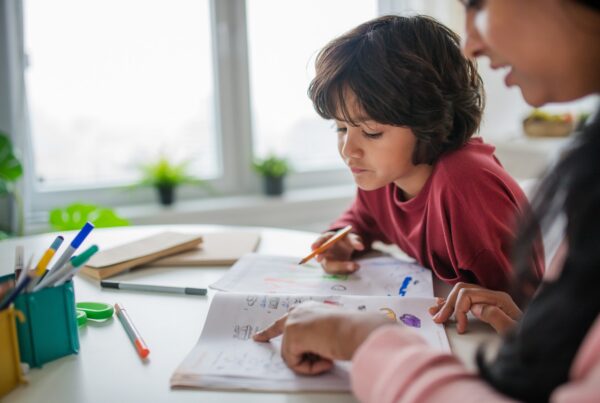
In one-on-one settings, support can be even more targeted. A tutor can slow the pace, repeat key terms, and use concrete materials that match the classroom unit. If a child mixes up weather words, the adult can revisit pictures and observations over several sessions. If the child understands the lesson but cannot explain it clearly, the adult can model sentence frames and practice oral responses.
This kind of individualized instruction is not about pushing kindergarteners into advanced science. It is about meeting them where they are developmentally and helping them build the foundational habits that science depends on.
How parents can support kindergarten science without turning home into school
At home, the most helpful support is usually simple, specific, and connected to real experiences. You do not need formal experiments every week. What matters more is helping your child observe, describe, compare, and explain everyday phenomena.
During a walk, you might ask, “What do you notice about the sky today?” or “How are these leaves different?” In the kitchen, you can compare materials, temperatures, or changes like melting and mixing. While getting dressed, you can talk about weather and why certain clothing fits the day. These short conversations strengthen the same thinking skills used in kindergarten science lessons.
Try to keep the language concrete. Instead of asking broad questions like “What did you learn in science?” you might ask, “Did you sort anything today?” “Did you make a prediction?” or “What did your teacher want you to notice?” Specific prompts are easier for young children to answer.
It also helps to accept partial answers and build from them. If your child says, “The rock is hard,” you can extend the thinking with, “Yes, hard is a property. Is it also smooth or rough?” If they say, “The plant is sad,” you can gently connect that observation to science language by saying, “It looks droopy. Maybe it needs water.” This kind of feedback supports learning without making the conversation feel like a quiz.
When your child continues to seem confused, extra academic support can be useful. Some families benefit from occasional tutoring that reinforces classroom topics through hands-on examples, visual supports, and patient explanation. In the early grades, that kind of help often builds confidence as much as content knowledge.
Tutoring Support
If your child enjoys science but struggles to explain ideas, remember vocabulary, or apply what they learned in class, extra support can be a positive next step. K12 Tutoring works with families to provide individualized academic guidance that matches a child’s pace and learning style. In kindergarten science, that may mean practicing observation language, reviewing concepts like living and nonliving things, or revisiting class activities with clearer structure and feedback.
For many young learners, one-on-one support helps science feel less confusing and more manageable. A tutor can break down directions, model how to answer science questions, and give your child repeated practice with the exact kinds of thinking their teacher is building in class. The goal is steady growth, stronger understanding, and a more confident learner over time.
Related Resources
- How To Build Your Child’s Confidence: A Parent’s Guide – Crimson Rise
- How High-Quality, Small-Group Tutoring Can Accelerate Learning – IES (U.S. Department of Education)
- Roles in Gifted Education: A Parent’s Guide – davidsongifted.org
Trust & Transparency Statement
Last reviewed: May 2026
This article was prepared by the K12 Tutoring education team, dedicated to helping students succeed with personalized learning support and expert guidance. K12 Tutoring content is reviewed periodically by education specialists to reflect current best practices and family feedback. Have ideas or success stories to share? Email us at [email protected].