

Key Takeaways
- Many first graders need time to master social studies because the subject asks them to connect big ideas like community, rules, citizenship, geography, and history to real life.
- Children at this age are still building reading, vocabulary, listening, and discussion skills, so social studies learning often develops alongside early literacy.
- Guided practice, teacher feedback, and one-on-one support can help your child move from memorizing facts to truly understanding people, places, and how communities work.
- Steady growth matters more than speed, especially in elementary social studies where concepts are often revisited across the year.
Definitions
Community: A group of people who live, work, or help in the same place, such as a neighborhood, school, or town.
Citizenship: The age-appropriate idea that people have roles, responsibilities, and ways to help others in a group or community.
Why social studies feels different in first grade
If you have wondered why 1st grade social studies concepts take longer to learn, you are not alone. Parents often notice that their child can quickly name a holiday symbol or recite a rule, but may still struggle to explain why communities need rules, how maps represent places, or what makes the past different from the present. That is very typical in first grade.
Social studies in the early elementary years is not just about learning facts. It asks children to organize ideas about time, place, people, fairness, leadership, and belonging. Those are abstract ideas for a 6- or 7-year-old. A first grader may understand, “We stop at red lights,” long before they can explain that rules help keep a community safe and orderly.
Teachers also know that first grade social studies is closely tied to language development. Students listen to read-alouds about families, neighborhoods, helpers, and traditions. They answer questions, compare examples, and use new words like past, present, map key, symbol, citizen, and responsibility. When a child is still learning how to follow multi-step directions or explain thinking out loud, social studies can seem slower than parents expect.
This is one reason classroom progress may look uneven. Your child might do well on a worksheet that asks them to match community helpers to jobs, but need more support when asked to discuss how those helpers contribute to daily life. That difference does not mean they are behind. It usually means they are still moving from recognition to understanding.
Elementary 1st Grade Social Studies asks children to think in new ways
In many classrooms, 1st grade social studies includes units on families, communities, national symbols, maps, timelines, holidays, leaders, and basic economics such as needs and wants. On the surface, these topics sound simple. In practice, they require several thinking skills at once.
For example, a teacher may ask students to look at a map of the school and identify the library, office, cafeteria, and playground. A child has to understand that the map is a representation, not the real building. They may need to use directional words like near, far, left, right, north, or south depending on the curriculum. They also need enough attention and visual processing to connect symbols on paper to places they know in real life.
History concepts can be even more challenging. First graders are often asked to compare life long ago with life today. Adults know that the past includes different time periods, traditions, tools, and daily routines. Young children often think in a much more immediate way. If something happened before they were born, they may group it all together as “a long time ago.” Understanding sequence, change over time, and historical perspective develops gradually.
Social studies also asks children to generalize from personal experience. A student may know the rules at home and the rules at school, but still need help seeing the larger idea that communities create rules to protect people and help everyone work together. This kind of transfer is a major developmental step.
Teachers commonly support this through discussion, picture sorts, class charts, and repeated examples. A child might sort pictures into categories like needs and wants, then explain why food belongs under needs and a toy belongs under wants. Even when the sorting is correct, the explanation may still be incomplete. That is a normal part of learning.
Common learning patterns parents may notice in 1st grade social studies
Because social studies combines vocabulary, reasoning, and discussion, children often show understanding in partial steps. You may notice some of these patterns at home:
- Your child remembers names and labels but has trouble explaining ideas in full sentences.
- Your child can identify a map symbol on a page but gets confused when using that symbol to answer a question.
- Your child knows that a president or mayor is a leader but cannot yet describe what leaders do.
- Your child mixes up past and present when talking about family history or historical figures.
- Your child gives very personal answers, such as “rules are because my teacher said so,” instead of broader social studies explanations.
These patterns help explain why first grade social studies concepts can take time to master. The challenge is often not effort. It is that the subject asks children to combine factual knowledge with language, memory, and reasoning.
Reading level can also affect performance. In many schools, social studies content is presented through short passages, captions, charts, and class discussions. If your child is still developing decoding or comprehension skills, they may understand more when content is read aloud than when they work independently. That is why teacher modeling matters so much in elementary social studies.
Another common issue is vocabulary overload. Words like government, citizen, responsibility, tradition, and history are not everyday words for many first graders. A child may hear them in class and repeat them correctly, but still need many examples before those words become meaningful. Repetition, visuals, and discussion help turn new vocabulary into usable understanding.
What if my child understands the stories but not the concepts?
This is a very common parent question. Many first graders enjoy books about families, holidays, famous Americans, or community helpers. They may retell the story well but miss the larger social studies lesson. For example, your child may remember that a firefighter drives a truck and helps in emergencies, but not yet connect that role to the broader idea of public service in a community.
That gap happens because story comprehension and concept formation are related but not identical. A child can follow characters and events without fully grasping the academic idea underneath. In class, teachers often bridge this by asking focused questions such as, “How does this person help the community?” or “What responsibility does this leader have?”
At home, you can support this same kind of thinking in simple ways. After reading a book about a neighborhood, ask your child to name who helps people in that setting and what job each person does. After a lesson on maps, ask them to draw a simple map of their bedroom or route to the kitchen and label key places. These activities work because they make abstract concepts more concrete.
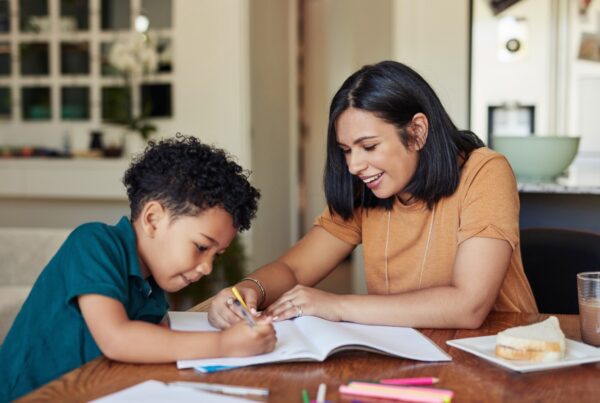
When children need extra help, individualized instruction can be especially useful. A tutor or teacher working one-on-one can slow down the pace, explain one term at a time, and ask follow-up questions that reveal what your child truly understands. Instead of only checking whether an answer is correct, guided support can uncover why an idea is confusing and what kind of example will make it click.
How teachers and tutors build understanding in Social Studies
Strong social studies instruction in first grade usually includes modeling, visuals, repetition, and conversation. Experienced elementary educators know that children this age learn best when ideas are tied to familiar routines and real places.
For instance, a teacher introducing rules and laws might begin with classroom expectations, then compare them with playground rules and traffic rules. That progression helps students see that rules exist in many settings for a reason. A tutor can reinforce the same concept by asking your child to sort examples into categories like home, school, and community, then explain what each rule helps people do.
Geography instruction often follows a similar pattern. Students may start with positional words in the classroom, move to a map of the school, and then study a simple town or state map. If a child struggles, guided practice can focus on one skill at a time, such as reading a map title, using a legend, or locating symbols.
Feedback matters here. In social studies, a child may give an answer that is partly right but incomplete. For example, if asked why communities have leaders, they might say, “Because they are in charge.” A teacher or tutor can build on that by prompting, “Yes, and what do leaders help a community do?” That kind of feedback encourages deeper thinking without making the child feel wrong.
Individual support can also help children who are quiet in class. Some first graders understand more than they show during whole-group discussion. In a smaller setting, they may be more willing to talk through ideas, ask questions, and practice using new vocabulary. That can make a real difference in confidence and retention. Parents looking for broader ways to encourage steady academic growth may also find helpful ideas in parent guides.
Course-specific ways to support learning at home
Home support works best when it matches what first grade social studies actually asks children to do. Rather than turning every lesson into extra homework, focus on short, concrete activities that reinforce classroom thinking.
Try using everyday routines to build time concepts. Look at family photos and talk about which happened in the past and which are happening now. Use words like before, after, long ago, and today. If your child confuses the order, place two or three pictures in sequence together and discuss what changed.
Build map skills with familiar spaces. Draw a simple map of your living room, backyard, or route to school. Add a few symbols and a key. Ask your child questions like, “Where is the couch on the map?” or “What does this star mean?” This mirrors the kind of visual reasoning many students use in class.
Support citizenship and community concepts through observation. On a walk, point out places and people that help a community function, such as a crossing guard, mail carrier, librarian, or bus driver. Then ask your child how each person helps others. This strengthens the move from naming a role to understanding its purpose.
You can also help with social studies vocabulary by keeping explanations short and concrete. If your child is learning needs and wants, use examples from daily life. Water, food, and shelter are needs. A second dessert or a new toy may be a want. The goal is not perfect language every time. The goal is repeated exposure with meaningful examples.
If homework leads to frustration, break tasks into smaller parts. A worksheet that asks for three examples of community helpers may be easier if your child first talks through ideas aloud, then draws pictures, and finally labels them. In first grade, oral rehearsal often supports better written work.
When slower progress is still healthy progress
Parents sometimes worry when social studies grades or comments seem less consistent than math facts or reading practice. But in elementary classrooms, social studies growth is often less linear. A child may seem to understand a unit during discussion, then struggle on an assessment that asks them to apply the idea in a new way.
That does not always signal a major problem. It often reflects the nature of the subject. Social studies asks children to classify, compare, explain, and connect. Those skills improve over time with revisiting and feedback.
Healthy progress may look like your child using one new vocabulary word correctly, giving a more complete explanation than last month, or recognizing that a map is a tool for showing real places. Those are meaningful gains. Teachers often watch for this kind of growth across a semester rather than expecting instant mastery after one lesson.
If your child continues to struggle, it can help to ask specific questions at conferences or in emails. Which concepts seem hardest right now? Is the challenge vocabulary, reading the directions, answering open-ended questions, or remembering content over time? These details matter because support should match the actual barrier.
When needed, tutoring can provide a calm space for reteaching and guided practice. In first grade social studies, that might mean using pictures, oral discussion, simple graphic organizers, and repeated examples to strengthen understanding. The goal is not to rush children through the material. It is to help them build a solid foundation they can use in later grades, when history, geography, and civics become more detailed.
Tutoring Support
K12 Tutoring supports families by meeting students where they are and helping them build understanding step by step. In a course like 1st grade social studies, personalized support can help your child make sense of vocabulary, class discussions, map activities, timelines, and community concepts at a pace that feels manageable. With targeted feedback and guided instruction, many children become more confident explaining ideas, not just recognizing them. That kind of support can strengthen both academic skills and classroom participation over time.
Related Resources
- How To Build Your Child’s Confidence: A Parent’s Guide – Crimson Rise
- How High-Quality, Small-Group Tutoring Can Accelerate Learning – IES (U.S. Department of Education)
- Roles in Gifted Education: A Parent’s Guide – davidsongifted.org
Trust & Transparency Statement
Last reviewed: May 2026
This article was prepared by the K12 Tutoring education team, dedicated to helping students succeed with personalized learning support and expert guidance. K12 Tutoring content is reviewed periodically by education specialists to reflect current best practices and family feedback. Have ideas or success stories to share? Email us at [email protected].