

Key Takeaways
- Second grade social studies asks children to build early skills in community awareness, map use, timelines, citizenship, and comparing past and present.
- Many students understand ideas during class discussions but need extra guided practice to explain them clearly in writing, on worksheets, or during quizzes.
- Parents often want to know how tutoring helps with 2nd grade social studies foundations, and the answer usually involves personalized pacing, vocabulary support, and feedback tied to actual classwork.
- With patient instruction and targeted practice, children can strengthen both content knowledge and the reading, speaking, and thinking skills that social studies requires.
Definitions
Social studies foundations are the basic concepts children need in order to understand people, places, communities, history, rules, and civic life.
Guided practice means an adult helps a student work through a task step by step before expecting them to do it independently.
Why 2nd grade social studies can feel harder than it looks
To many adults, 2nd grade social studies can seem simple because the topics sound familiar. Students may learn about neighborhoods, helpers in a community, government basics, goods and services, maps, holidays, historical figures, and how life has changed over time. But for a 7- or 8-year-old, these lessons involve more than memorizing facts.
In elementary classrooms, social studies often combines reading comprehension, listening, discussion, vocabulary, and early writing. A child might read a short passage about a mayor, study a map key, answer questions about why communities have rules, and then write two sentences comparing school life today with school life long ago. That is a lot of thinking packed into one lesson.
Teachers often see students who can talk about a topic out loud but struggle when they need to sort information, choose the right vocabulary, or explain their thinking on paper. This is a normal learning pattern in elementary school. Social studies asks children to connect ideas, not just repeat them.
Parents may notice this at home when homework looks easy at first glance, but their child gets stuck on directions like “compare,” “explain,” or “give an example.” A worksheet about community workers may turn into a challenge if your child is unsure how a firefighter and a doctor are similar, or why both are important to public safety. The content is age appropriate, but the reasoning can still be demanding.
That is one reason individualized support can matter. When instruction slows down and focuses on how your child is processing the material, social studies becomes easier to understand and less frustrating to complete.
What children are really learning in elementary 2nd grade social studies
Strong instruction in elementary 2nd grade social studies is not just about naming facts. It helps children organize how they think about the world around them. In many classrooms, students are expected to build several foundational skills at once.
One major area is community understanding. Children learn that communities include people with different roles, responsibilities, and needs. They may study local leaders, public services, transportation, and how citizens help a community function. A child who can name a librarian, postal worker, and police officer is only at the beginning. The deeper goal is understanding what each person does and why that work matters.
Another area is time and history. Second graders often compare past and present. They may look at photographs, read short biographies, or discuss how homes, schools, and transportation have changed. This requires sequencing, noticing details, and using time words such as “before,” “long ago,” “today,” and “then.” Children who mix up chronology may need repeated practice with timelines and oral retelling.
Map and geography skills are also common. Students learn cardinal directions, map symbols, land and water features, and how maps help people understand location. Some children enjoy maps right away, while others need someone to model how to read a compass rose, use a legend, or answer questions like “What is north of the park?”
Social studies also introduces early civics. Students begin learning why rules exist, what fairness means, and how people make decisions in groups. A classroom lesson on voting may seem straightforward, but it actually teaches cause and effect, participation, and respectful disagreement.
These are meaningful academic foundations. They support later learning in history, geography, government, and even informational reading. This is why teachers and education specialists often view elementary social studies as an important thinking subject, not an “extra” subject.
Where students commonly need extra help in social studies
When parents ask about support, the most useful answer is usually specific. Children do not all struggle in the same way. In 2nd grade social studies, a few patterns show up often.
Some students have trouble with vocabulary. Words like “citizen,” “government,” “rural,” “urban,” “producer,” and “consumer” are new and abstract. A child may hear the word during class and nod along, but still not be able to use it correctly later. Tutoring can help by revisiting vocabulary in simple language, connecting it to real examples, and practicing it across different assignments.
Other students struggle with reading social studies text. Even short passages can contain dense information. A paragraph about how goods move from farms to stores may include several ideas at once. If your child is still developing reading fluency, social studies can feel harder because they are decoding and learning content at the same time.
Some children need support with written responses. A teacher may ask, “Why do communities have laws?” Your child may know that laws help people stay safe, but writing a complete answer with details is a different skill. Guided instruction helps children turn spoken understanding into organized sentences.
There are also students who need help with attention, pacing, or task completion. A map activity with multiple directions can be overwhelming if your child misses one step. In those cases, breaking assignments into smaller parts and building routines can make a real difference. Families looking for broader learning support sometimes benefit from resources on focus and attention alongside course-specific help.
How does tutoring support 2nd grade social studies learning?
Parents often ask this as a practical question. What does tutoring actually look like in a subject like social studies? In most effective settings, it is not about drilling random facts. It is about helping your child process class material in a way that matches their current stage of learning.
A tutor might begin by reviewing a recent classroom topic such as communities and government. Instead of asking your child to memorize definitions immediately, the tutor may use pictures, discussion, and examples from daily life. For instance, if the class is studying rules and laws, the tutor could ask, “What rules do you follow at school? Why do those rules matter?” This helps the child connect a big idea to something concrete.
Then the tutor can guide your child through the kind of task they are expected to do in class. If a worksheet asks students to sort examples into “goods” and “services,” the tutor can model one or two items first, explain the difference, and then let your child try the rest with feedback. That kind of step-by-step support often reduces confusion quickly.
Another important part of tutoring is checking for misunderstandings that can be easy to miss in a busy classroom. A child may think a map symbol is just a picture, not a clue that stands for a place. Or they may confuse “past” with “old” and not understand that social studies is asking them to compare time periods. One-on-one instruction makes it easier to catch these gaps and correct them gently.
This is one of the clearest ways tutoring helps with 2nd grade social studies foundations. It gives children time to ask questions, revisit ideas, and practice using new concepts until they feel more familiar and manageable.

What guided practice can look like at this age
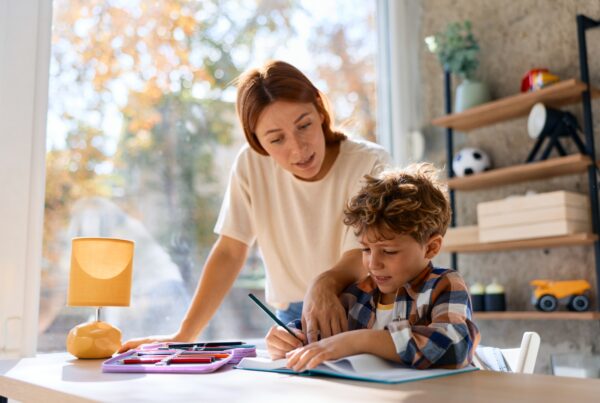
In second grade, children usually learn best when support is active and specific. A tutor or parent might sit beside your child and talk through a task rather than simply saying, “Try harder” or “Read it again.”
Imagine your child is learning to compare life in the past and present. A tutor may place two pictures side by side, such as an old classroom and a modern classroom. First, your child is asked to notice details. Then they sort those details into “same” and “different.” Next, they practice saying a full sentence aloud, such as, “Both classrooms have students, but the classroom from long ago has chalkboards and wooden desks.” Only after that oral rehearsal do they write the sentence down.
That sequence matters. Educationally, young learners often need to see, say, sort, and then write. Teachers use this progression in classrooms, and tutoring can reinforce it with more time and individualized feedback.
Map work offers another good example. If a child is asked to identify locations using north, south, east, and west, a tutor might first review the compass rose, then ask simple questions with a visual map, then move to more complex directions. Instead of correcting every mistake immediately, the tutor can ask, “Let’s find north first. Now if the library is above the school, which direction is it?” This kind of prompting strengthens reasoning, not just answer getting.
Guided practice is especially helpful for children who become quiet when they are unsure. In a classroom, they may not always raise their hand to ask for clarification. In one-on-one support, they often feel safer making mistakes and trying again.
A parent question: what if my child says social studies is boring?
This is a common concern, especially in elementary school. Sometimes “boring” means the material feels disconnected from your child’s life. Other times it means the work feels confusing, repetitive, or too language heavy.
When children do not fully understand a subject, they often describe it as boring because that feels easier than saying, “I do not get it.” A child who struggles to read informational passages may lose interest in a unit about communities, even if they would enjoy discussing real places, jobs, and traditions out loud.
Tutoring can help by making the content more interactive and concrete. A lesson on goods and services becomes more engaging when your child talks about a grocery store, restaurant, or mechanic they know. A lesson on maps becomes more meaningful when they map their route to school or identify places in their own neighborhood. A lesson on citizenship becomes more memorable when they connect it to classroom jobs, fairness, and helping others.
Interest often grows when understanding grows. Children are more willing to participate when they know what the words mean, what the task is asking, and how to be successful. That is why support in social studies should not only focus on motivation. It should also focus on comprehension, language, and confidence.
How feedback builds confidence and independence
One of the most valuable parts of individualized academic support is feedback that is immediate, specific, and encouraging. Young children benefit when adults point out exactly what is working and what to adjust next.
For example, if your child answers, “A mayor helps the city,” a tutor might respond, “That is a strong start because you named the leader and the community. Let’s add one detail about what the mayor does.” This kind of feedback builds precision without making the child feel wrong.
In social studies, feedback can improve several skills at once. It can help a child use vocabulary more accurately, answer in complete sentences, organize ideas in order, and support an answer with a reason. Over time, this helps children rely less on guessing and more on clear thinking.
Parents may also notice that confidence in social studies can carry over into other subjects. When a child becomes more comfortable reading informational text, discussing evidence, and writing short explanations, those habits support classroom learning more broadly. That does not make social studies generic. It shows why this subject is such a useful place to build foundational academic habits.
As children become more secure, they are often better able to participate in class discussions, complete homework with less resistance, and explain what they are learning at home. These are meaningful signs of growth, even before they show up on a quiz or report card.
Tutoring Support
K12 Tutoring can be a helpful partner when your child needs more time, clearer explanations, or extra practice in 2nd grade social studies. Personalized support can focus on the exact skills your child is working on in class, whether that means community roles, map reading, timelines, vocabulary, or written responses. With guided instruction and patient feedback, many students build stronger understanding and become more confident discussing what they know.
For parents, that support can also make the course feel easier to understand. Instead of wondering why a simple worksheet turns into a struggle, you can see which specific skills need reinforcement and how targeted practice helps. In a subject built on language, reasoning, and real-world concepts, individualized instruction can give children the structure they need to make steady progress.
Related Resources
- How To Build Your Child’s Confidence: A Parent’s Guide – Crimson Rise
- How High-Quality, Small-Group Tutoring Can Accelerate Learning – IES (U.S. Department of Education)
- Roles in Gifted Education: A Parent’s Guide – davidsongifted.org
Trust & Transparency Statement
Last reviewed: May 2026
This article was prepared by the K12 Tutoring education team, dedicated to helping students succeed with personalized learning support and expert guidance. K12 Tutoring content is reviewed periodically by education specialists to reflect current best practices and family feedback. Have ideas or success stories to share? Email us at [email protected].