Key Takeaways
- Social Studies 7 often asks students to read closely, analyze sources, track chronology, and explain cause and effect all at once, which can make the course feel harder than parents expect.
- When families ask why students struggle with social studies skills, the answer is usually not a lack of effort. More often, students need clearer modeling, guided practice, and support with reading, writing, and organization.
- Middle school learners often improve when adults break assignments into smaller steps, give specific feedback, and help them practice how historians read, think, and write.
- Individualized support, including tutoring, can help students strengthen content knowledge and the academic habits needed for quizzes, document work, short responses, and larger projects.
Definitions
Primary source: a document, image, speech, map, artifact, or record created during the time being studied. In Social Studies 7, students may use primary sources to infer point of view, context, and historical significance.
Cause and effect: the relationship between an event and the results that follow it. This is a core thinking skill in social studies because students are often asked to explain not just what happened, but why it happened and what changed afterward.
Why Social Studies 7 can feel harder than parents expect
Many parents are surprised when a child who enjoys history stories still struggles in Social Studies 7. That is because this course is usually not just about memorizing names, places, and dates. It asks students to work like beginning historians and geographers. They may need to read a textbook chapter, study a map, compare two sources, answer short-response questions, and prepare for a quiz that includes vocabulary and written analysis.
In many middle school classrooms, the workload becomes more layered in grade 7. A lesson on ancient civilizations, early governments, world religions, or regional geography may require students to understand new content while also practicing academic skills such as note-taking, summarizing, identifying bias, and citing evidence from a passage. If your child seems to know the material when talking about it but struggles on paper, that pattern is common.
This helps explain why students struggle with social studies skills in middle school. The challenge is often a mix of content demands and skill demands. A student may understand that rivers helped civilizations grow, for example, but still have trouble writing a paragraph that clearly connects geography, agriculture, trade, and political development. Another student may remember the main idea of a lesson but lose points because they skipped part of the question or did not support an answer with details from the text.
Teachers see this often. A student may participate well in discussion, then earn a lower score on a document-based assignment because they are still learning how to interpret charts, timelines, and excerpts from historical texts. This is not unusual. Social studies in grade 7 begins asking for more independent reasoning, and many students need time and explicit instruction to grow into that level of work.
Common Social Studies skills that trip students up
One of the most useful ways to support your child is to look past the overall grade and identify the exact skill causing friction. In Social Studies 7, several patterns show up again and again.
Reading informational text. Social studies reading is dense. Textbooks and classroom articles often include domain-specific vocabulary, long paragraphs, sidebars, captions, maps, and timelines. Students may read every word without noticing which ideas matter most. Others move too quickly and miss signal words such as because, however, or as a result, which are essential for understanding historical relationships.
Understanding chronology. Grade 7 students are often expected to place events in order and explain how one development led to another. A child may know several facts about a civilization or era but not understand the sequence. Without a clear timeline, cause-and-effect reasoning becomes much harder.
Using evidence in writing. Many assignments ask students to answer a question using information from notes, readings, or primary sources. This is where middle school social studies starts to overlap with literacy instruction. Students must explain their thinking, not just state an opinion. For instance, if a prompt asks, “How did geography influence settlement patterns?” a strong answer needs examples, not a broad sentence like “Geography was important.”
Interpreting maps and visuals. Social studies is full of nontraditional texts. Students may need to read a political map, identify trade routes, compare two graphs, or analyze an image for clues about culture and daily life. Some children understand written passages better than visuals, while others have the opposite pattern. Both need practice connecting visual information to the lesson objective.
Studying for assessments. A quiz in Social Studies 7 might include vocabulary, matching, map labeling, short answer, and a written response. That mix can be difficult for students who do not yet have strong study habits. They may reread notes passively instead of testing themselves, organizing terms by theme, or practicing how to explain ideas in complete sentences.
When parents understand these specific demands, it becomes easier to see that a low score does not always mean a child is weak in social studies overall. It may point to one or two teachable skills that need more direct support.
Why middle school Social Studies 7 often exposes hidden learning gaps
Middle school is a transition period. In earlier grades, students may have completed shorter social studies tasks with more teacher guidance. By grade 7, teachers often expect greater independence. Students may need to manage notebooks, track multi-step assignments, and prepare for tests with less day-to-day prompting. That shift can reveal gaps that were less visible before.
For example, a student with strong verbal knowledge may not have learned how to pull key ideas from a chapter efficiently. Another may understand class discussions but struggle to turn notes into a study plan. A student with ADHD or executive functioning challenges may know the content but lose assignments, rush through reading questions, or forget to review vocabulary over several days. These are real classroom patterns, not signs that a child is not capable.
It is also common for students to hit a wall when the writing expectations increase. A seventh grader may be asked to compare two societies, explain the impact of a government system, or analyze the reliability of a source. Those tasks require sentence-level writing skills, topic development, and evidence selection. If writing has been difficult in other classes, social studies can become the place where that challenge shows up more clearly.
Teachers and tutors often notice that students need support in how to think through the task, not just what answer to give. A child might benefit from hearing a model such as, “First, underline the question words. Next, find two details from your notes. Then, turn each detail into a complete sentence that answers the prompt.” That kind of guided instruction is powerful because it makes the process visible.
This is one reason expert-informed educational support matters. Students do better when adults identify the underlying skill, model the thinking step by step, and provide feedback while the student is still practicing, not only after the grade is posted.

What this struggle looks like in real classwork and homework
Parents often see the results of difficulty but not the exact moment where confusion starts. In Social Studies 7, that moment can happen in several ways.
Your child may bring home a worksheet on ancient trade routes and answer the factual questions correctly, but miss the final item asking them to explain how trade changed cultural exchange. That shows a jump from recall to analysis. Or your child may study vocabulary words like empire, monarchy, and citizen, then freeze on the test because they can define the terms but cannot apply them in context.
Another common example is the document-based question. A teacher may provide a short excerpt, a political cartoon, and a map, then ask students to explain a historical issue using all three. A student who is comfortable with one source at a time may feel overwhelmed by the need to synthesize information. They may focus on the easiest source and ignore the others, which leads to an incomplete answer.
Projects can be difficult for a different reason. A child may be assigned a presentation on a region, civilization, or historical turning point. The challenge may not be the topic itself, but organizing research, choosing relevant facts, creating a timeline, and presenting clearly. Parents sometimes interpret this as procrastination when it is really a planning problem.
These examples matter because they help families respond more effectively. Instead of saying, “You need to try harder in social studies,” it is often more useful to say, “Let’s look at whether the hard part was reading the source, organizing your answer, or remembering the sequence of events.” That shift lowers frustration and points toward practical next steps.
How guided practice helps students build stronger social studies thinking
Social studies skills improve best when students get repeated, structured practice with feedback. This is especially true in grade 7, when the course asks for more explanation and less simple recall.
One helpful strategy is to practice reading like a historian. If your child has a short passage for homework, ask them to circle unfamiliar words, underline the main claim, and box two supporting details. Then ask, “What is this source mostly trying to show?” and “What detail proves that?” This kind of conversation mirrors what strong classroom instruction often does. It slows the thinking down and teaches students where to look.
Another useful routine is timeline building. If your child is studying a unit with several events, have them place each event on a simple line and add one note about why it mattered. This supports chronology and helps students answer questions about change over time. It is especially helpful for students who know isolated facts but do not yet see how events connect.
For writing, short guided responses are often more effective than asking a child to write a full paragraph immediately. You might use a frame such as: “One important cause was **_. This mattered because _**. A detail from the lesson that shows this is \_\_\__.” Over time, students can move from structured responses to more independent writing.
Feedback matters here. Specific comments such as “You answered the question, but you need one more detail from the map” are more useful than general praise or correction. Students grow when they know exactly what to adjust. This is a principle teachers use every day, and it is one reason personalized academic support can be so effective.
When individualized support and tutoring make a difference
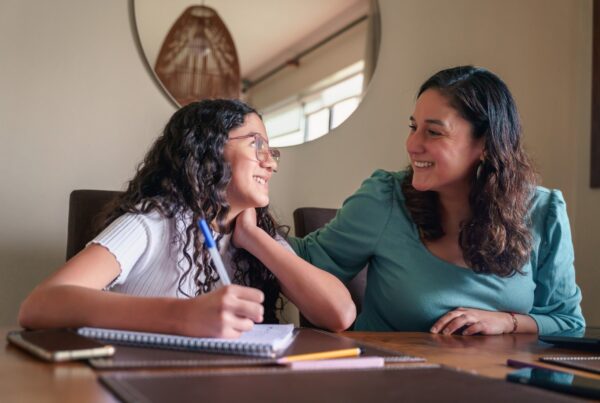
Sometimes a student needs more than occasional homework help. If your child regularly struggles to read social studies texts, organize notes, prepare for quizzes, or write evidence-based responses, individualized instruction can help make the course more manageable.
In one-on-one or small-group support, a tutor can slow down the process and identify the exact breakdown. Is your child misunderstanding vocabulary? Skimming too quickly? Missing the difference between summary and analysis? Having trouble turning notes into test preparation? These are all teachable issues, but they are easier to address when someone can observe the student closely and respond in real time.
For example, a tutor might help a seventh grader learn how to annotate a source, sort vocabulary by category, or practice answering short-response questions using evidence. Another student may need support with planning and organization, such as building a weekly routine for reading, note review, and quiz preparation. In those cases, targeted academic help can strengthen both social studies performance and broader learning habits.
K12 Tutoring works with families who want that kind of practical, course-aware support. The goal is not to do the work for students. It is to help them understand the material, develop stronger habits, and become more independent over time. For many middle school learners, that combination of content support and skill-building leads to better confidence in class.
If your child has a 504 plan, an IEP, or a known learning difference, individualized support can also help align strategies with how they learn best. Some students benefit from chunked reading, verbal rehearsal before writing, visual timelines, or repeated guided practice with source analysis. Those supports are common, appropriate, and often very effective.
What parents can watch for at home
Is my child struggling with content or with the skills behind the content?
This is one of the most helpful questions a parent can ask. If your child can explain the lesson aloud but struggles on assignments, the issue may be writing, reading comprehension, or organization. If they cannot explain the lesson even after reviewing notes, they may need more direct teaching of the content itself.
Watch for patterns such as incomplete answers, confusion about timelines, difficulty studying vocabulary, or frustration with maps and source excerpts. Notice whether homework becomes easier when you read the directions together or help break the task into steps. If that support changes the outcome, your child may need more structured guidance rather than simply more time.
It can also help to look at teacher feedback closely. Comments like “add evidence,” “be more specific,” “answer all parts,” or “review chronology” provide useful clues. They tell you what the course is emphasizing and where your child may need extra practice.
Most important, remind your child that needing support in Social Studies 7 is normal. This course asks students to integrate reading, writing, reasoning, and content knowledge in ways that are still new for many middle school learners. Progress usually comes from steady practice, clear feedback, and support that matches the student’s learning needs.
Tutoring Support
If your child is having a hard time with Social Studies 7, extra support can be a practical and encouraging next step. K12 Tutoring helps students strengthen course-specific skills such as source reading, note-taking, vocabulary study, timeline work, and evidence-based writing. With guided instruction and personalized feedback, students can build understanding, confidence, and more independence in classwork and test preparation.
Related Resources
- How To Build Your Child’s Confidence: A Parent’s Guide – Crimson Rise
- How High-Quality, Small-Group Tutoring Can Accelerate Learning – IES (U.S. Department of Education)
- Roles in Gifted Education: A Parent’s Guide – davidsongifted.org
Trust & Transparency Statement
Last reviewed: May 2026
This article was prepared by the K12 Tutoring education team, dedicated to helping students succeed with personalized learning support and expert guidance. K12 Tutoring content is reviewed periodically by education specialists to reflect current best practices and family feedback. Have ideas or success stories to share? Email us at [email protected].