

Key Takeaways
- Kindergarten science practice can feel harder than it looks because young children are learning science ideas, listening skills, vocabulary, and directions at the same time.
- Many mistakes come from language, attention, or fine motor demands rather than a lack of curiosity or ability.
- Hands-on discussion, picture support, and guided feedback often help children show what they know more accurately than independent worksheets alone.
- When your child needs extra help, individualized instruction can turn confusing practice into steady science growth and stronger confidence.
Definitions
Practice problems are short tasks that help children apply a science idea, such as sorting living and nonliving things, identifying weather patterns, or choosing what plants need to grow.
Guided practice means an adult supports the child during learning by asking questions, modeling how to think through a task, and giving feedback before the child works more independently.
Why science practice can feel surprisingly complex in kindergarten
Parents are often puzzled by why kindergarten science practice problems are tricky for young learners when the topics seem so familiar. After all, kindergartners already notice rain, animals, shadows, plants, and the five senses in everyday life. The challenge is that school science asks children to do more than notice the world. It asks them to sort, compare, describe, predict, and explain using new words and classroom routines.
In kindergarten science, a simple-looking question may actually involve several steps. A child might need to listen to the teacher, remember the direction, look closely at pictures, understand a word like observe or compare, and then mark an answer carefully. That is a lot for a 5- or 6-year-old brain to manage at once.
This is one reason teachers and early learning specialists often look beyond whether an answer is right or wrong. They pay attention to how a child approached the task. Did your child misunderstand the picture? Forget the direction? Mix up the science idea with a reading challenge? In kindergarten, those pieces are closely connected.
For example, a worksheet may ask students to circle things that need sunlight. A child may correctly know that a plant needs sunlight, but circle the sun instead of the plant because the direction was confusing. Another child may understand the idea but rush and mark every outdoor picture. These are common early learning patterns, not signs that a child cannot do science.
Science at this age is also deeply language-based. Children are expected to talk about texture, temperature, movement, seasons, habitats, and basic cause and effect. If your child is still building expressive language, they may understand more than they can explain on paper. That gap can make practice work seem harder than the actual science concept.
What kindergarten science practice problems are really asking children to do
One helpful way to understand your child’s experience is to look at the hidden demands inside common kindergarten science tasks. A question about weather, plants, animals, or materials may seem straightforward to an adult, but it often includes multiple early academic skills.
Consider a few realistic examples from kindergarten science:
- Sorting living and nonliving things. Your child must know what counts as living, but also notice details in the pictures. A stuffed bear and a real bear can be confusing if the images are small or cartoon-like.
- Identifying what plants need. The science idea may be familiar, but the task may ask children to pick several correct answers from a group that includes sunlight, water, rocks, and toys. That requires both content knowledge and careful decision-making.
- Using the five senses. A child may know that ears are for hearing, but struggle if the question shows a child listening to birds while also seeing trees and flowers in the picture.
- Describing weather. A student may understand sunny, rainy, and windy, but have trouble matching those words to symbols or sentence stems.
Kindergarten teachers know that early science is not just about facts. It is about learning how to observe closely, talk about evidence in simple ways, and connect experiences to categories. That is an important credibility point for parents to remember. In many classrooms, science practice is designed to build reasoning habits, not just memorization.
Another classroom reality is that young children often perform differently in whole-group lessons than in independent practice. During a hands-on activity, your child may eagerly explain that ice melts when it gets warm. Later, on a paper task, they may miss the question entirely. That does not always mean the concept was not learned. It may mean the format changed the level of difficulty.
If this sounds familiar, it can help to think of kindergarten science as a blend of content learning and school readiness. Your child is learning science ideas while also learning how to be a student in a structured academic setting.
Elementary kindergarten science challenges often come from language and format
Many parents expect science to be one of the easier subjects in the early grades because it connects to the real world. In some ways, that is true. Children are naturally curious. They love bugs, clouds, magnets, and growing things. But practice problems in elementary kindergarten science can become difficult when the task format gets in the way.
Language is one of the biggest reasons. Kindergarten science includes important vocabulary such as sink, float, predict, observe, habitat, season, and change. These words may be brand new, or they may have meanings that feel different in school. A child might know what weather feels like, but not yet understand how to answer, “Which picture shows a weather pattern in winter?”
Visual interpretation can also be tough. Young learners are still figuring out how to read diagrams, symbols, and classroom pictures. If a worksheet asks students to match an animal to its habitat, a child may choose based on what looks familiar rather than what is scientifically accurate. A fish near a beach scene may seem right if the child is focusing on water, even if the intended answer is pond or ocean.
Then there is the issue of attention and pacing. Kindergarten assignments are short, but they still require focus. A child may begin carefully and then lose track halfway through. In science, where one picture detail can change the answer, that matters. This is especially important for children who are still developing self-regulation or who need extra support with focus. Families looking for broader help with attention-related learning habits may find useful ideas in these parent resources on focus and attention.
Fine motor demands can also affect outcomes. If your child knows the answer but has trouble circling, drawing, cutting, or gluing accurately, their work may not reflect their understanding. Teachers in early elementary classrooms are usually very aware of this. That is why many of them combine observation, conversation, and hands-on tasks with written practice when they assess science learning.
Why do science worksheets seem harder than hands-on activities?
This is one of the most common parent questions in kindergarten. Your child may shine during experiments, nature walks, or class discussions, then struggle with a practice page sent home in a folder. That difference makes sense.
Hands-on science gives children real objects and actions to think about. If they pour water, touch ice, watch a seed sprout, or sort classroom objects by texture, they can rely on direct experience. Worksheets require them to translate that experience into symbols, pictures, and directions. Translation is harder than participation.
Imagine a class activity about sinking and floating. During the lesson, your child drops a spoon, cork, and plastic block into water and excitedly reports what happens. Later, a worksheet shows six small pictures and asks which objects float. Now your child must remember the experiment, identify the pictures, and ignore distractors. That is a very different task.
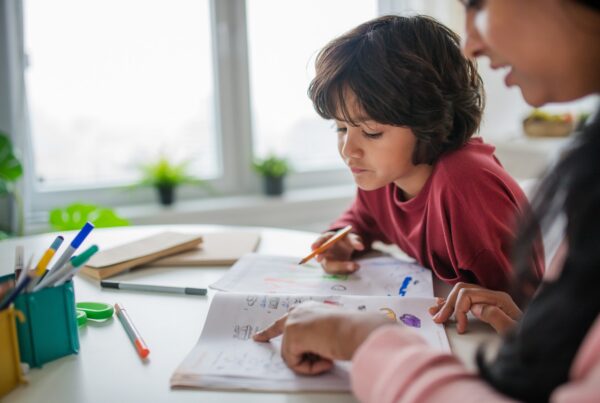
This is why guided instruction matters so much in kindergarten science. When an adult sits beside a child and says, “Let’s look carefully. What happened to the cork in the water?” the child is supported in connecting the experience to the question. That kind of feedback helps children build the bridge between hands-on discovery and academic practice.
It also explains why some children benefit from verbal responding before written work. If your child can say the answer but not complete the worksheet independently, that gives useful information. The next step is not to assume failure. It is to provide more modeling, more repetition, and more chances to practice in a developmentally appropriate way.
How parents can support kindergarten science learning at home
You do not need to turn home into a science lab to help your child. In fact, the best support is usually simple, specific, and connected to what kindergarten science actually asks children to do.
Start by talking through science ideas in everyday routines. At breakfast, ask what happens when ice warms up. On a walk, notice clouds, wind, shadows, or seasonal changes. While watering a plant, ask what plants need to live. These short conversations build the vocabulary and observation skills that show up later in practice problems.
When a worksheet comes home, slow the task down. Read directions aloud. Point to one item at a time. Ask your child to explain what they notice before choosing an answer. In many cases, the problem becomes much easier once the language load is reduced.
It also helps to use real objects whenever possible. If the assignment is about sorting materials, gather examples from around the house. If the topic is senses, talk about what your child can hear, smell, or feel in the moment. If the class is studying weather, look outside together before answering questions. Kindergarten science makes more sense when children can connect paper tasks to real experiences.
Parents can also support accuracy by checking for one common issue at a time. Instead of saying, “You need to be more careful,” try a more targeted prompt such as, “Let’s look at the direction again,” or “Tell me why you picked that picture.” That kind of feedback is more useful for young learners because it teaches a process, not just a correction.
If your child becomes frustrated, it is okay to pause. In kindergarten, short successful practice is often better than pushing through a long, tiring session. A few supported questions with discussion can do more for learning than finishing a page in tears.
When extra support can make a real difference
Some children need a little more repetition, structure, or one-on-one explanation to show what they know in science. That is not unusual. Early elementary classrooms include students with different language backgrounds, developmental timelines, attention patterns, and learning preferences. Good support meets children where they are.
If your child regularly struggles with kindergarten science practice, look for patterns. Do they know the concepts when talking but not on paper? Do they confuse science vocabulary? Do multi-step directions lead to mistakes? Do they rush, lose focus, or shut down when work feels unfamiliar? Those patterns can guide the kind of help that will be most effective.
Targeted support may include teacher feedback, extra guided practice at home, or tutoring that breaks science tasks into manageable steps. In one-on-one instruction, a child can get immediate help with vocabulary, picture interpretation, and reasoning. A tutor can also notice whether the main obstacle is science understanding itself or another early learning skill that affects performance.
This kind of individualized support is often especially helpful in kindergarten because small misunderstandings can become habits if they are not addressed early. A child who learns to observe carefully, explain simple cause and effect, and approach science questions with confidence is building skills that will matter in later grades.
K12 Tutoring can be a supportive option for families who want that kind of personalized academic help. With guided instruction and feedback matched to your child’s pace, science practice can become less confusing and more meaningful. The goal is not perfect worksheets. It is stronger understanding, growing independence, and a more confident learner.
Tutoring Support
If your child enjoys science but struggles to show that understanding on practice pages, extra support can help make the learning process clearer. In kindergarten science, a tutor can slow down directions, model how to look at pictures carefully, build vocabulary through conversation, and give immediate feedback that fits your child’s developmental stage.
K12 Tutoring works with families to provide individualized support that feels encouraging and academically focused. For young learners, that can mean more guided practice with topics like weather, plants, animals, materials, and the five senses, along with help connecting hands-on knowledge to classroom assignments. Personalized instruction can help your child build confidence while developing the habits and reasoning skills that support long-term science learning.
Related Resources
- How To Build Your Child’s Confidence: A Parent’s Guide – Crimson Rise
- How High-Quality, Small-Group Tutoring Can Accelerate Learning – IES (U.S. Department of Education)
- Roles in Gifted Education: A Parent’s Guide – davidsongifted.org
Trust & Transparency Statement
Last reviewed: May 2026
This article was prepared by the K12 Tutoring education team, dedicated to helping students succeed with personalized learning support and expert guidance. K12 Tutoring content is reviewed periodically by education specialists to reflect current best practices and family feedback. Have ideas or success stories to share? Email us at [email protected].